It’s 6:42 a.m. You’re barefoot. You haven’t had coffee. Your dog, however, has already made three executive decisions:
- The day has started.
- You are late.
- The squeaky toy must die immediately.

If you’ve ever asked yourself, “Why is my dog like this?” — the answer is usually older than your lease.
It’s written in the breed groups.
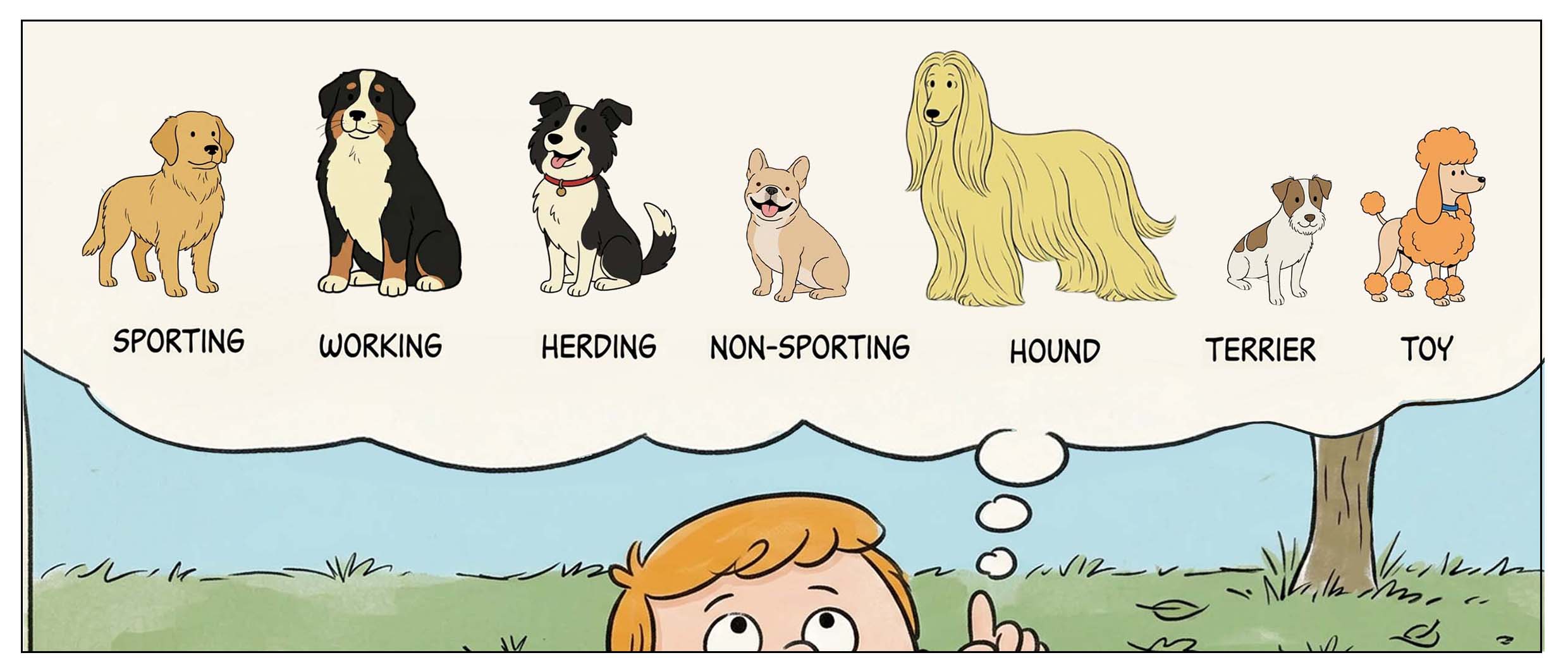
The American Kennel Club (AKC) sorts recognized breeds into seven categories: Sporting, Hound, Working, Terrier, Toy, Non-Sporting, and Herding.

At first glance, it looks like bureaucracy — folders in a filing cabinet. But these groups aren’t based on size, coat, or Instagram aesthetics. They’re based on jobs.
Before dogs were couch guardians and snack supervisors, they were specialists:
- Sporting dogs retrieved birds from freezing water
- Herding dogs managed livestock with precision stares and quick decisions
- Terriers went underground after vermin
- Working dogs guarded property or pulled sleds across ice

Humans selectively bred the dogs that were best at these tasks. Over generations, those jobs became instincts — hardwired patterns of thinking and moving.
A landmark 2017 genomic study in Science (Parker et al.) confirmed it: many behavioral traits cluster in ways that still mirror those historical roles.
Even if your dog’s most serious responsibility today is judging your snack choices.
Why This Matters When Choosing Dog Toys
Generic “one-size-fits-all” toys often fail because dogs aren’t one-size-fits-all. When a toy doesn’t match what the dog was bred to do, two things happen:
- The toy gets ignored
- Or the instinct gets redirected (→ your shoes, couch corners, throw pillows)
Understanding the AKC groups helps you choose toys that redirect instinct instead of fighting it.
That’s exactly why we created 7 toy packs — one for each AKC group.
Each pack contains toys selected and tested to channel the drives that still live inside your dog:
- Sporting → fetch, carry, teamwork toys
- Hound → scent tracking, nose puzzles
- Working → tough tugs, heavy-duty chews
- Terrier → squeakers, prey-like action
- Toy → gentle, confidence-building play
- Non-Sporting → varied, quirky stimulation
- Herding → mental puzzles, directional tasks
When play matches instinct, something shifts:
- Less destruction
- Calmer, more satisfied dogs
- Stronger bond through activities that actually make sense to them

Your dog isn’t random. He’s historically consistent — sometimes inconveniently so.
And the right toy doesn’t fix him. It gives him a way to be himself — safely, happily, and without turning your living room into a crime scene.
Ready to match your dog with toys that actually fit who he is?